Trace the evolution of Skateboard Guitar Stickers! Explore their history from punk zines to modern digital art, and uncover the deep cultural meaning behind these iconic decals.
Introduction: The Sticky Timeline of a Subculture
Skateboard Guitar Stickers are so ubiquitous today that it’s easy to take them for granted. But these small, adhesive artifacts have a rich history that parallels the evolution of skateboarding and punk/indie music themselves. They are not a modern marketing ploy; they are the direct descendants of a DIY ethos that valued self-expression and community over commercial appeal. This article will take you on a journey through time, exploring how Skateboard Guitar Stickers evolved from punk rock zines to become a fundamental pillar of street culture
identity.
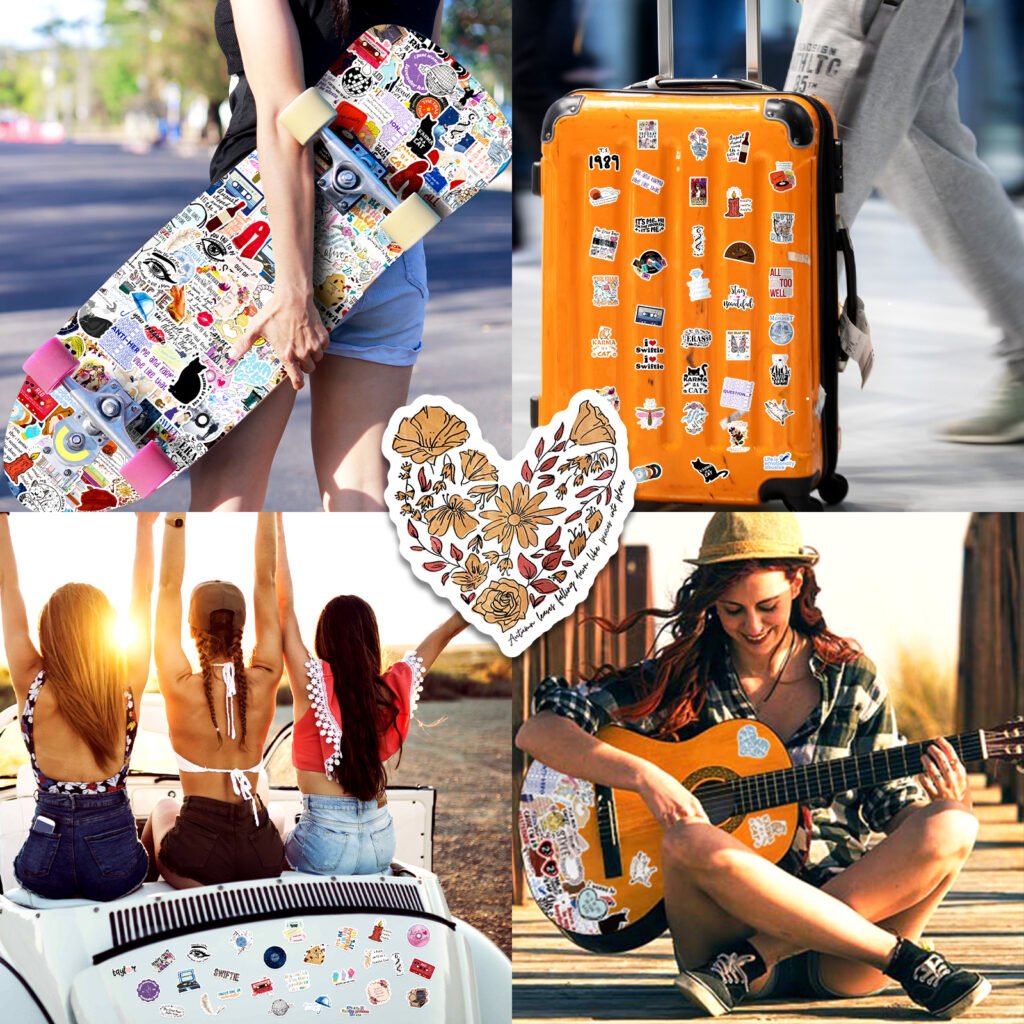
Chapter 1: The Analog Age (1980s-1990s): Zines, Xerox Machines, and Band Merch
The story begins before the internet, in the world of analog communication.
- The Rise of the Zine: Punk rock and skate culture were spread through photocopied zines (fanzines). These were hand-made, often crudely assembled magazines featuring band interviews, concert reviews, skate photography, and political rants. They were the social media of their day.
- Stickers as Promotion: Bands and skate companies quickly realized that including a hand-drawn or Xeroxed sticker with a zine or as cheap merch was a powerful way to get their name into the world. These early Skateboard Guitar Stickers were often black and white, blurry, and full of gritty charm.
- The Physical Network: You got stickers from a friend, at a show, or from that cool employee at the local skate shop. This created a tangible network. A sticker on your board was a direct connection to a specific place, event, or person.
Chapter 2: The Mainstream Crossover (2000s): Pop-Punk and Mall Culture
As skateboarding was catapulted into the mainstream by the X-Games and MTV, the associated music and aesthetics followed.
- The Pop-Punk Explosion: Bands like Blink-182, Sum 41, and Green Day dominated the airwaves. Their music was skate-friendly, and their merch was everywhere. Skateboard Guitar Stickers from these bands became mass-produced, full-color, and highly sought after by a new, broader audience.
- Mall Core and Accessibility: You no longer had to seek out a niche shop. You could find band stickers in chain stores like Hot Topic. This democratized access but also diluted the underground, DIY authenticity of the earlier era.
Chapter 3: The Digital Revolution (2010s-Present): The Rise of the Independent Artist
The internet changed everything, and it was a renaissance for sticker culture.
- Etsy and Social Media: Platforms like Etsy, Instagram, and Redbubble allowed independent artists to reach a global audience. Suddenly, you weren’t limited to band logos. You could find Skateboard Guitar Stickers designed by an artist in Sweden who shared your exact niche interests.
- The Aesthetic Diversifies: The digital toolset allowed for incredible diversity. Artists could now create intricate illustrations, perfect vintage recreations, and clever graphic designs that were impossible with a Xerox machine. The very definition of a Skateboard Guitar Stickers expanded.
- Global Community: A skater in California could be using a sticker from a digital artist in Berlin, who was inspired by a Japanese band. The digital age created a hyper-connected, global tapestry of style.
Chapter 4: The Deeper Meaning: Why We Still Stick
Through all these changes, the core reasons for using Skateboard Guitar Stickers have remained constant.
- Tribal Identification: They are a quick, visual way to signal your belonging to a tribe. They answer the question, “Are you one of us?”
- Personal Narrative: Each sticker is a chapter in your life’s story. The band you saw, the skate shop you frequented, the artist you discovered online. Your collage is your autobiography.
- The Permanence of the Impermanent: In a digital world where profiles are deleted and trends change in a day, a physical sticker is a semi-permanent mark. It’s a commitment. Peeling it off leaves a residue, a ghost of a past identity. This tangible nature gives it weight and meaning that a digital “like” can never have.
Conclusion: An Enduring Legacy
The history of Skateboard Guitar Stickers is a history of modern subculture itself. It’s a story of technology, commerce, and community. From the gritty zines of the 80s to the digital storefronts of today, the desire to declare our passions and connect with like-minded souls has never faded. It has simply found new, sticky ways to express itself. The legacy continues, one peel and one stick at a time.